
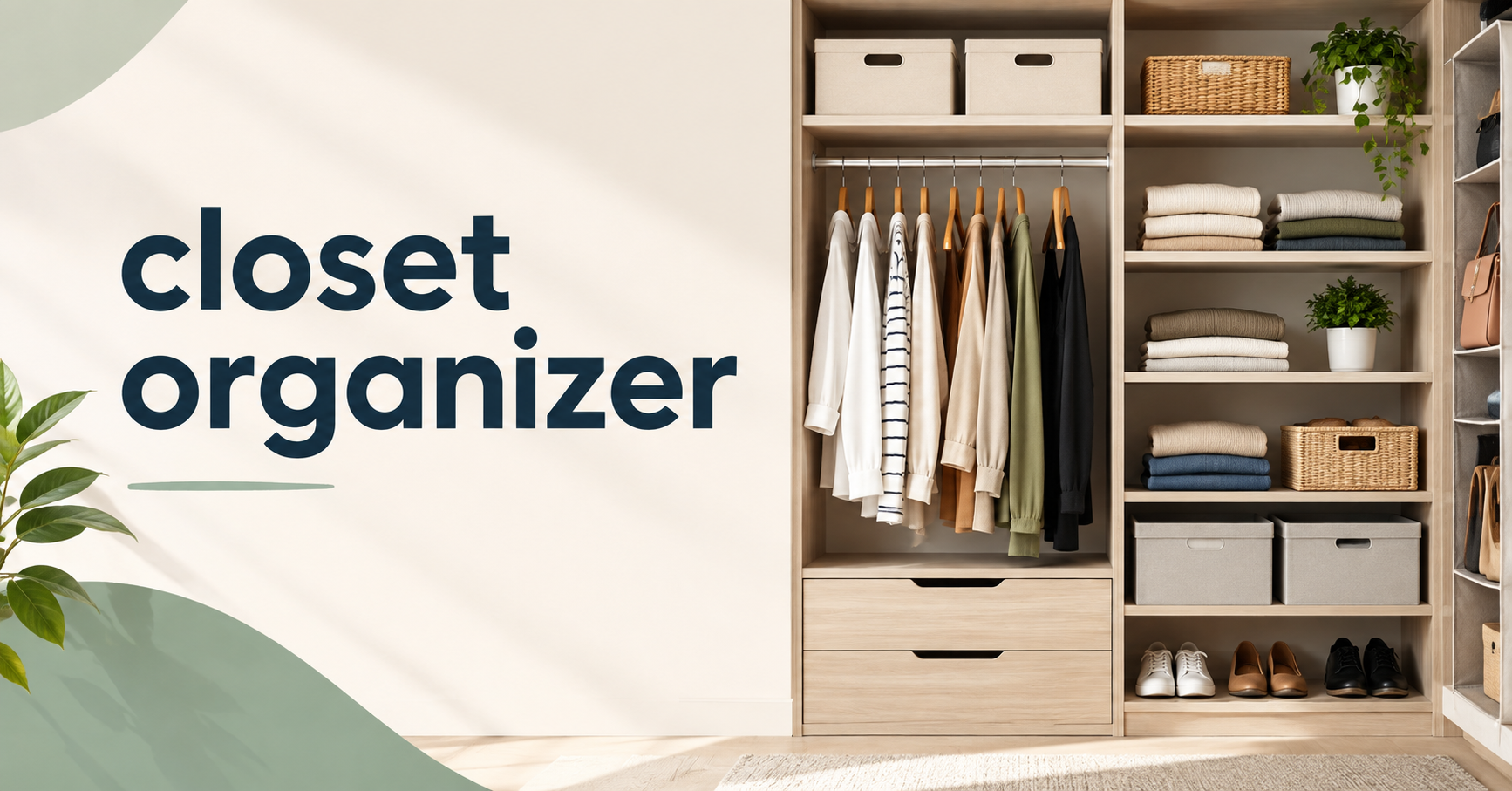
A crowded closet can make even a small wardrobe feel impossible to manage. The right closet organizer can change that without requiring a major renovation. The secret is simple: use every level of your closet, remove items you no longer need, and give each category a clear home. Here’s how to create more usable storage with less effort.
What Is the Simple Closet Organizer Trick for More Storage Space?
The simple trick is to organize your closet vertically instead of using only the hanging rod and floor. A closet organizer helps divide unused areas into useful storage zones. Think of upper shelves, door space, lower areas, and extra hanging levels. This approach works especially well in small bedrooms, apartments, and busy family homes.
Why This Simple Method Works
Many people assume they need a larger wardrobe when their current one becomes crowded. Often, the problem is not the size of the closet. It is how the available space is being used.
Professional organizers commonly recommend removing items you no longer use before adding storage products. This prevents you from organizing clutter rather than solving the real problem.
A good system should also make everyday clothing easy to see and reach. If your favorite clothes are hidden behind rarely used items, getting dressed becomes harder than it needs to be.
The goal is simple: less wasted space and easier access.
Step-by-Step: Create More Storage in Your Closet
1. Start With a Quick Declutter
Take everything out or work through one section at a time. Separate clothing into four groups:
- Keep
- Donate
- Sell
- Store elsewhere
Be honest about what you actually wear. Clothes that no longer fit, are damaged beyond repair, or have not been used for a long time may not deserve valuable closet space.
Do not buy storage products before this step. You may discover that removing unused items creates more room than expected.
2. Measure Before You Organize
Use a measuring tape to check the width, height, and depth of your closet.
Measure shelves, hanging areas, and the space below your clothes. This prevents you from purchasing organizers that are too large or too small.
A practical closet organizer should fit your available space rather than force your closet to accommodate it.
3. Use the Vertical Space
Look above your main hanging area. Is there empty space near the ceiling?
Add shelves or storage boxes for seasonal clothing, bags, bedding, or accessories that you do not use every day.
You can also consider a second hanging rod when the closet height allows it. Professional organizing advice frequently recommends double hanging levels as a way to increase usable hanging capacity.
4. Choose Slim, Matching Hangers
Bulky and mismatched hangers can waste valuable hanging space. Replacing them with slimmer, uniform hangers creates a cleaner appearance and can help you fit more garments onto the rod.
Velvet hangers can also help prevent some clothing from slipping. Specialized hangers can be useful for belts, scarves, and accessories.
The key is consistency. When every hanger has a similar shape, the closet becomes easier to scan.
5. Give Small Items a Home
Shoes, handbags, scarves, belts, and jewelry can quickly make a closet look messy.
Use small bins, drawer organizers, shelf dividers, or door-mounted storage. Label containers when necessary, especially if you store seasonal items.
A good closet organizer is not only about hanging clothes. It should also help manage the smaller items that often get overlooked.
6. Keep Frequently Used Items Within Reach
Place everyday clothing between eye and waist level whenever possible.
Rarely used items can go on higher shelves or into labeled containers. This creates a simple hierarchy: daily items stay accessible, while occasional items use less convenient storage.
This small change can make your morning routine much faster.
Common Mistakes to Avoid
Buying Storage Before Decluttering
Adding boxes to an already crowded closet can make the problem worse. Remove unwanted items first.
Ignoring Vertical Space
Many closets have unused space above hanging clothes. Shelves, bins, or another hanging level can turn that empty area into practical storage.
Using Too Many Different Containers
A mixture of random boxes can make the closet look chaotic. Choose a simple system with similar containers where possible.
Storing Everything at Eye Level
Not every item needs prime storage space. Keep daily essentials accessible and move seasonal or occasional items higher.
Making the System Too Complicated
If putting clothes away requires several steps, you may stop following the system. Keep categories simple and realistic.
How to Maintain Your Organized Closet
Organizing your closet once is helpful. Maintaining it is even more important.
Try a five-minute reset at the end of each week. Return misplaced clothes, fold loose items, and check whether anything has started collecting on the floor.
You can also review your wardrobe when the seasons change. Move heavy winter clothing out when warmer weather arrives, and bring seasonal pieces forward when needed. Experts frequently recommend seasonal rotation as a practical way to free up everyday space.
Another useful habit is the one-in, one-out rule. When you buy a new item, consider removing something you no longer use. This helps prevent your storage system from becoming overloaded again.
Where to Find More Information
For additional organizing ideas, look for guidance from established home-organization publications and professional organizers. Good Housekeeping's recent closet research includes advice from professional organizers on decluttering, vertical storage, matching hangers, drawer systems, and storage bins.
You can also research different storage systems based on your closet's dimensions. Compare materials, installation requirements, durability, and accessibility before making a purchase.
Author transparency: This article combines practical closet-organization principles with recently published guidance from professional organizers and home-organization experts. Recommendations should be adapted to your closet size, wardrobe, budget, and daily routine.
Conclusion
You do not always need a bigger closet to gain more storage. Start by removing unused clothing, measuring your space, using vertical areas, choosing efficient hangers, and creating simple storage zones. A well-planned closet organizer can make everyday items easier to find while reducing visual clutter. Start with one section today and build your system gradually.
FAQs
1. What is the best way to organize a small closet?
Start by decluttering, then divide the space into zones. Use slim hangers, vertical shelves, storage bins, and additional hanging levels where appropriate. Keep frequently used clothing within easy reach.
2. How can I get more storage space without buying a new wardrobe?
Use the space you already have more efficiently. Add shelves, double hanging rods, door storage, or under-shelf organizers. Decluttering can also create significant usable space without changing the closet itself.
3. Are closet organizers worth it?
They can be useful when they solve a specific storage problem. Before buying one, measure your closet and decide what needs organizing. The right closet organizer should improve access and make better use of otherwise wasted space.
4. How do I organize clothes to save space?
Group clothing by type, such as shirts, trousers, dresses, and jackets. Use consistent hangers and fold suitable garments neatly. Store seasonal clothing separately when possible.
5. How often should I organize my closet?
A quick weekly reset can prevent clutter from building up. A larger review every few months or during seasonal changes can help you remove unused items and adjust your storage system.